
C and D Face Grades in Structural Boards, Explained
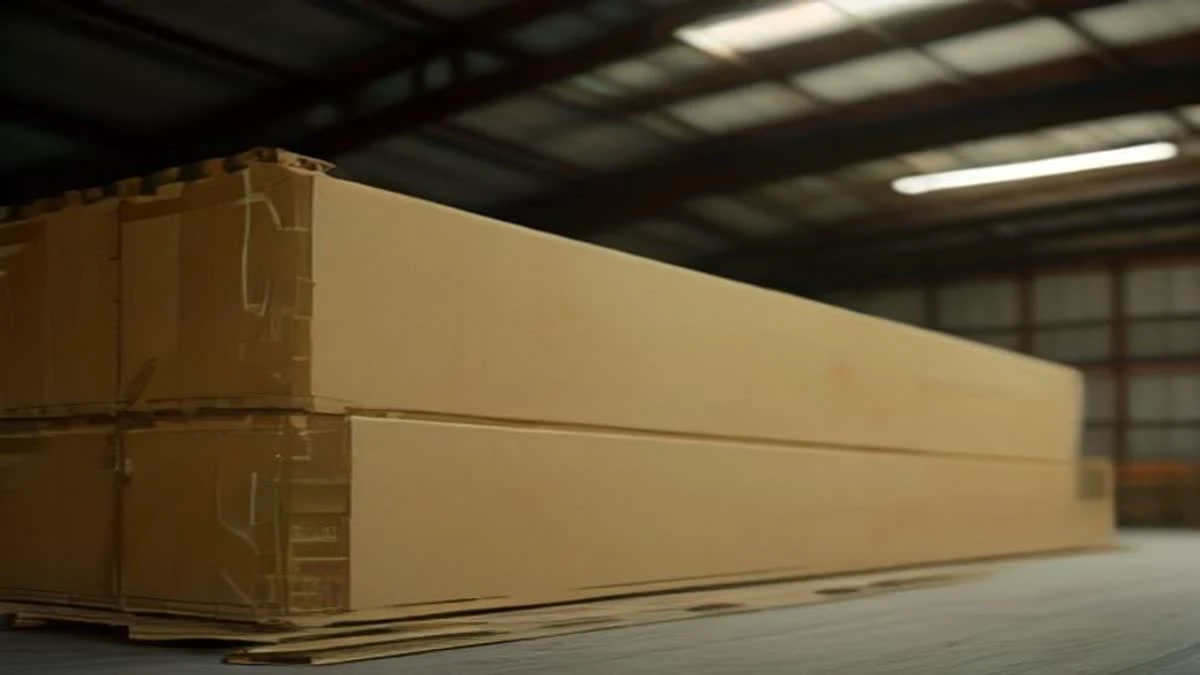
The letters C, D and X in the CDX designation describe three separate properties — the face grade, the back grade and the glue class — and understanding what each letter means prevents buyers from specifying a panel that does not match the application. Dongstar Wood produces CDX panels from pine veneers with a cross-laminated structure designed to reduce warping and splitting under load, and the product is positioned for structural sheathing, subfloors and industrial packaging rather than for visible interior finishes.
Key takeaways
- C-grade face, D-grade back and X — Exterior — glue are the three properties encoded in the CDX designation.
- Cross-laminated pine veneer structure reduces warping and splitting under load on structural applications.
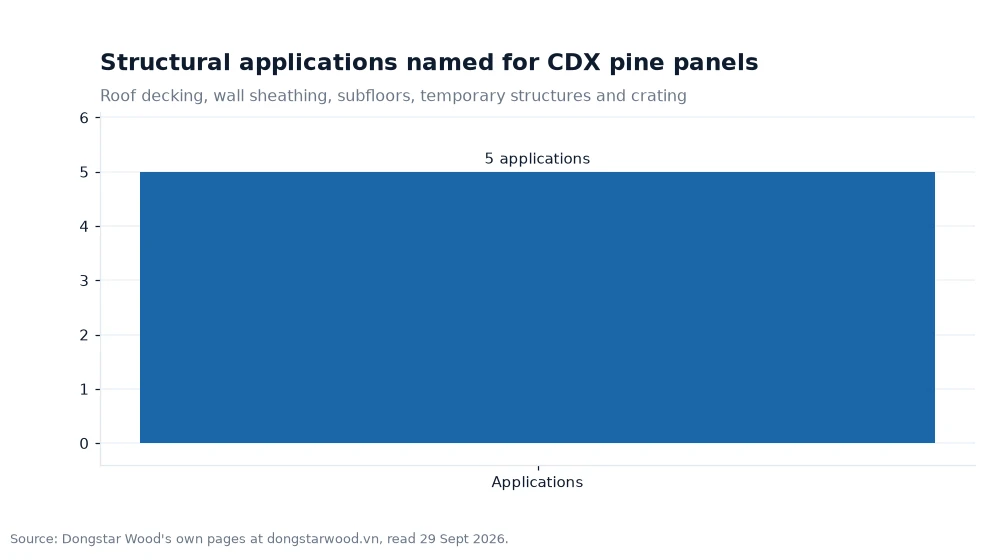
- Five named applications: roof decking, wall sheathing, subfloor, temporary structures and crating.
- Exterior glue resists moisture during construction phases but panels are not suited to permanent weather exposure.
What the C grade means on the face of the panel
The C grade describes the visual condition of the face veneer: smooth and sound, but with more variations, knots and burls than the higher A and B grades used for visible furniture surfaces. A C-grade face is not defective — it is a construction-grade surface where structural performance matters more than cosmetic appearance. The knots are sound and tight, the grain is continuous, and the veneer provides a stable substrate for adhesives, underlayments and floor coverings that will be installed on top.
For structural sheathing and subfloor applications the C-grade face is the standard specification, because the face will be covered by flooring material, drywall or exterior cladding. Specifying a higher grade for a surface that will never be seen wastes material cost on a cosmetic improvement that adds no structural value. The C grade is where the structural panel market concentrates, and it is the grade that most builders encounter in day-to-day work.
The D grade on the back: economy without compromise
The D grade on the back of a CDX panel allows more knots, burls and colour variation than the C-grade face, because the back is the non-visible side in most installations. In a wall sheathing application the D-grade back faces the stud cavity; in a subfloor installation it faces the joists below. The structural contribution of the back veneer is the same regardless of its visual grade — it provides the cross-lamination that gives the panel its strength and dimensional stability — but the lower cosmetic standard reduces the material cost.
This is the economic logic behind the CD designation: the face that will be seen or covered receives a higher cosmetic standard, while the face that will be hidden receives a lower one. The result is a panel that performs structurally like a higher-grade product at a price point that makes it competitive for high-volume structural applications.
The X: what exterior glue means in practice
The X in CDX stands for Exterior, which describes the adhesive used to bond the pine veneer layers. Exterior glue is designed to resist moisture and rain exposure during the construction phase — the period between when the panels are installed and when the building envelope is sealed. This is an important distinction: exterior glue does not mean the panel is waterproof or suitable for permanent outdoor exposure. It means the bond line will survive the rain, humidity and condensation that occur on a building site before the roof, walls and cladding are in place.
Once the building envelope is sealed and the panels are protected from direct weather exposure, the exterior glue performs adequately for the life of the structure. But a CDX panel left exposed to rain, sun and temperature cycling on a permanent outdoor application will degrade over time, because the adhesive is rated for construction-phase exposure, not for decades of direct weather contact. Buyers who need permanent outdoor performance should specify a panel with a higher glue grade.
Applications: where CDX pine panels earn their place
The manufacturer names five structural applications for CDX pine plywood. Crating and industrial packaging come first, covering everything from heavy-duty crates to pallets. Temporary structures — hoarding, fencing and temporary floors — together with construction barriers form the second group. Subfloor installations follow, where the panel serves as underlayment beneath carpet, laminate or vinyl. Exterior wall sheathing and roof decking, including shingle or tile underlayment, complete the list. These are all applications where the panel performs a structural function and the face grade is secondary to load capacity, dimensional stability and moisture resistance during construction.
The cross-laminated pine veneer structure is what makes these applications possible, because the alternating grain direction of each layer resists the warping and splitting that would occur in a solid timber panel of the same thickness. The construction-grade material keeps the cost down for high-volume applications, while the exterior glue provides the moisture resistance needed during the period when the building is still open to the weather.
| Property | Published value | Application note |
|---|---|---|
| Face grade | C-grade | Smooth and sound, construction standard |
| Back grade | D-grade | More variations, hidden in most installations |
| Glue class | X — Exterior | Moisture resistance during construction phases |
| Veneer | Pine | Cross-laminated for strength and stability |
| Primary uses | 5 named applications | Structural sheathing, subfloors, crating |
Worked example: sheet area for a subfloor installation
To estimate the number of CDX panels needed for a subfloor, start with the area of a standard sheet. The 1220 × 2440 mm format gives 1220 × 2440 = 2,976,800 mm² = 2.9768 m². For a room measuring 6 m × 4.5 m, the floor area is 6 × 4.5 = 27 m². Allowing for 10% cutting waste, the material requirement is 27 × 1.10 = 29.7 m². Dividing by the sheet area gives 29.7 ÷ 2.9768 = 9.98, so 10 sheets of 1220 × 2440 mm CDX pine plywood would cover the subfloor with allowance for offcuts and edge trimming.
If the same room uses 1500 × 3000 mm panels — available as a custom format — the area per sheet is 1500 × 3000 = 4,500,000 mm² = 4.5 m². The count drops to 29.7 ÷ 4.5 = 6.6, so 7 sheets. The larger format reduces the number of joints in the subfloor, which improves the structural continuity of the installation and reduces the amount of seam tape or adhesive needed at the panel edges.
Frequently asked questions
What does the X in CDX actually mean?
The X stands for Exterior, which describes the adhesive used to bond the pine veneer layers. Exterior glue resists moisture and rain exposure during the construction phase, but it does not make the panel waterproof or suitable for permanent outdoor use. Once the building envelope is sealed, the panels are protected from direct weather and the exterior adhesive performs adequately for the life of the structure.
Can CDX plywood be used for visible interior finishes?
CDX panels are designed for structural applications where the face will be covered by flooring, drywall or cladding. The C-grade face is sound and smooth but shows more knots and variations than A or B grades, which makes it unsuitable for exposed furniture surfaces or decorative wall panelling. For visible interior finishes the manufacturer offers birch plywood and other species with higher face grades and finer surface appearance.
Is CDX plywood the same as exterior plywood?
CDX plywood uses exterior-grade glue, but the designation is not identical to a product marketed simply as "exterior plywood." The C and D face grades, the pine veneer species and the cross-laminated construction are all part of the CDX specification. A panel labelled "exterior plywood" may use different face grades, different veneer species or different adhesive systems, so the buyer should confirm the full specification rather than relying on a single descriptor.
Choosing between CDX and higher-grade structural panels
The CDX Pine Plywood designation is a practical solution for builders who need structural performance at an economical price, and the five named applications cover the majority of construction uses for pine plywood. Buyers who need a higher face grade for visible applications can check the commercial plywood range for panels with Birch, Pine or Bleached Poplar face veneers at A and B grades. For projects that require a grip surface for scaffolding and walkways, the wire mesh anti-slip panels provide a textured face designed for worker safety rather than concrete release. Each product line serves a distinct purpose, and the right choice starts with understanding whether the panel needs to carry a structural load, produce a visible finish or provide grip underfoot.
Values used throughout were lifted from Dongstar Wood's own site checked 29 Sept 2026[1].