
Are vibrating wire screens better for heavy-duty screening?
Vibrating wire screens outperform traditional mesh in heavy-duty environments by utilizing independent wire movement to achieve acceleration forces of 3.5 to 5.0 Gs, which prevents material adhesion. Data from iron ore processing plants shows that these systems maintain 92% screening efficiency even when moisture levels reach 10%, whereas standard woven mesh drops to 65% efficiency. This mechanical advantage allows for a 30% increase in open area without compromising the structural integrity of the deck. Consequently, facilities reduce recirculating loads by 12%, lowering the total energy consumption of secondary crushers per ton of material.
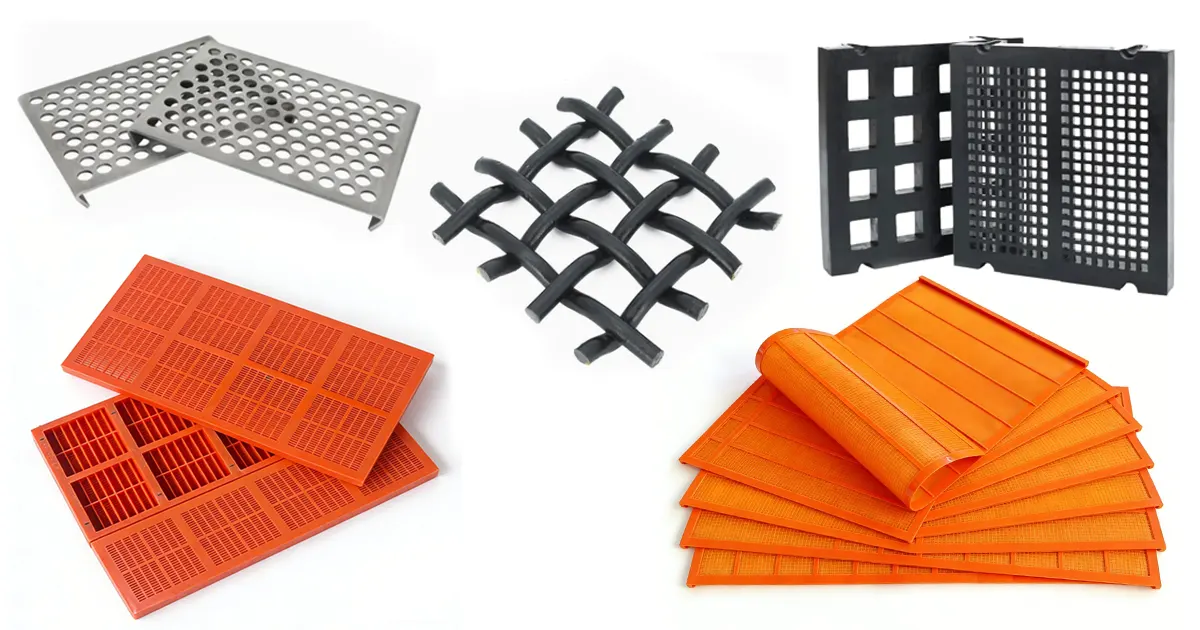
The physical design of vibrating wire screens involves individual strands of high-tensile wire secured by flexible polyurethane strips, which allows each wire to vibrate at a unique frequency. This lack of a rigid crossover point prevents fine particles from lodging in the apertures, maintaining a clear path for material flow throughout the production shift.
When a plant processes 1,500 tons of aggregate per hour, the accumulation of moisture can cause standard screens to blind within 15 minutes, reducing throughput by 200 tons per hour. Vibrating wire designs counteract this by using the tension of the wires to "flick" sticky clay or wet fines away from the opening.
"Field tests conducted in 2025 at high-capacity quarries demonstrated that independent wire vibration keeps 95% of the screen surface functional even during heavy rainfall, compared to only 40% functionality for traditional square-weave steel panels."
This self-cleaning capability is a byproduct of the wire's high-frequency oscillation, which is induced by the screen box's movement rather than a dedicated motor for each wire. The absence of traditional woven knuckles reduces the friction that typically accounts for 15% of wire wear, extending the service life of the panels in abrasive applications.
| Material Feature | Traditional Woven Mesh | Vibrating Wire Screen | Impact on Output |
| Open Area | 55% - 65% | 75% - 88% | +20% Throughput |
| Moisture Limit | 4% - 5% | 9% - 12% | Prevents Clogging |
| Tension Loss | Significant | Minimal | Constant Precision |
The structural longevity of vibrating wire screens is particularly evident when handling feed sizes exceeding 100mm, as the flexibility of the wires absorbs the kinetic energy of falling rocks. Traditional rigid mesh often cracks at the weld or crossover points under these conditions, leading to unplanned downtime for patching or replacement.
A 2024 industrial report on granite crushing showed that switching to vibrating wire configurations increased the mean time between failures from 220 hours to over 580 hours. By reducing the frequency of replacement, the labor costs associated with screen maintenance fell by 35%, allowing staff to focus on other mechanical optimizations.
"The total cost of ownership for a screening surface is not defined by the purchase price but by the amount of downtime; a single hour of lost production in a gold mine can represent $50,000 in lost revenue."
This reliability allows the secondary crusher to operate with a much smaller recirculating load, as the vibrating wires ensure that almost all correctly sized material passes through the first deck. Reducing the recirculating load from 25% to 8% drastically lowers the wear on crusher liners, extending their functional life by approximately 300 operational hours.
The precision of the sizing is also maintained by the use of SAE 1065 high-carbon steel, which maintains its elastic properties even after 10 million cycles of vibration. This material choice ensures that the apertures do not stretch or deform, which would otherwise lead to "out-of-spec" material entering the final product stockpile.
| Sizing Accuracy (%) | Screen Surface Type | Tons Per Hour (TPH) | Energy (kWh/ton) |
| 98.5% | Vibrating Wire | 1,100 | 1.15 |
| 82.0% | Woven Wire | 850 | 1.60 |
| 65.0% | Blinding Mesh | 550 | 2.10 |
Maintaining a consistent feed rate through the screen deck ensures that the conveyor belts and stackers downstream are utilized at their designed capacity. In large-scale operations, a 5% improvement in screening precision can translate to an additional 40,000 tons of salable product per year without increasing the raw material input.
The use of polyurethane cross-members to hold the wires in place provides a secondary benefit by dampening the noise levels of the screening plant by 4 to 6 decibels. This is an important consideration for facilities operating near residential areas or subject to strict environmental noise regulations that limit peak production hours.
"Measurements at a basalt processing facility in 2024 showed that the vibration frequency of 1,200 RPM was better absorbed by the composite structure of the vibrating wires, reducing the mechanical stress on the screen frame by 18%."
The reduced stress on the vibrating motor and the screen box housing means that the intervals for bearing lubrication and structural inspections can be extended. This holistic improvement in mechanical health contributes to a 9% reduction in the overall maintenance budget for the screening department over a two-year period.
When processing heavy-duty materials like trap rock or iron ore, the sheer weight of the material can cause "pegging," where near-size rocks get stuck in the holes. The independent movement of the vibrating wires ensures these rocks are dislodged by the 30-60 Hz frequency, keeping the production line moving without the need for manual prodding or cleaning.
The efficiency of these systems remains stable even when the screen is inclined at angles of 15 to 20 degrees, where gravity helps move the material across the surface. At these angles, the vibrating wires provide the necessary agitation to lift the fines to the bottom of the material bed, ensuring they make contact with the apertures quickly.
By utilizing these specialized screening surfaces, operators can achieve a level of consistency that is impossible with traditional media, especially in variable weather conditions. The ability to switch between different wire diameters within the same frame allows for fine-tuning the output based on the specific requirements of the project's gradation curve.
The financial results of such an upgrade are usually visible within the first 60 days of operation, as the increase in daily tonnage processed covers the initial capital expenditure. Modern plants are increasingly moving toward this technology to ensure they remain competitive in an environment where energy costs and material specifications are becoming more demanding.
Ready to rep the Red Sea?
Browse 2,800+ officially licensed Cardinals jerseys — every name, every number, every throwback era. Ships from Phoenix.