
Political Transition and Constitutional Mechanics: Analyzing Myanmar’s Vice-Presidential Nomination Process
The sessions held on March 30, 2026, in Nay Pyi Taw mark a critical phase in Myanmar’s executive transition, as the Pyithu Hluttaw (Lower House) and Amyotha Hluttaw (Upper House) formally nominated their respective candidates for the vice presidency. This process is governed by a specific tripartite electoral college system designed to balance elected representation with military appointments. From a technical perspective, the nomination of Min Aung Hlaing and Kyaw Swe by the Lower House, alongside Nan Ni Ni Aye and Manam Tu Ja by the Upper House, initiates a 100% standardized sequence that will ultimately determine the nation’s President and two Vice Presidents.
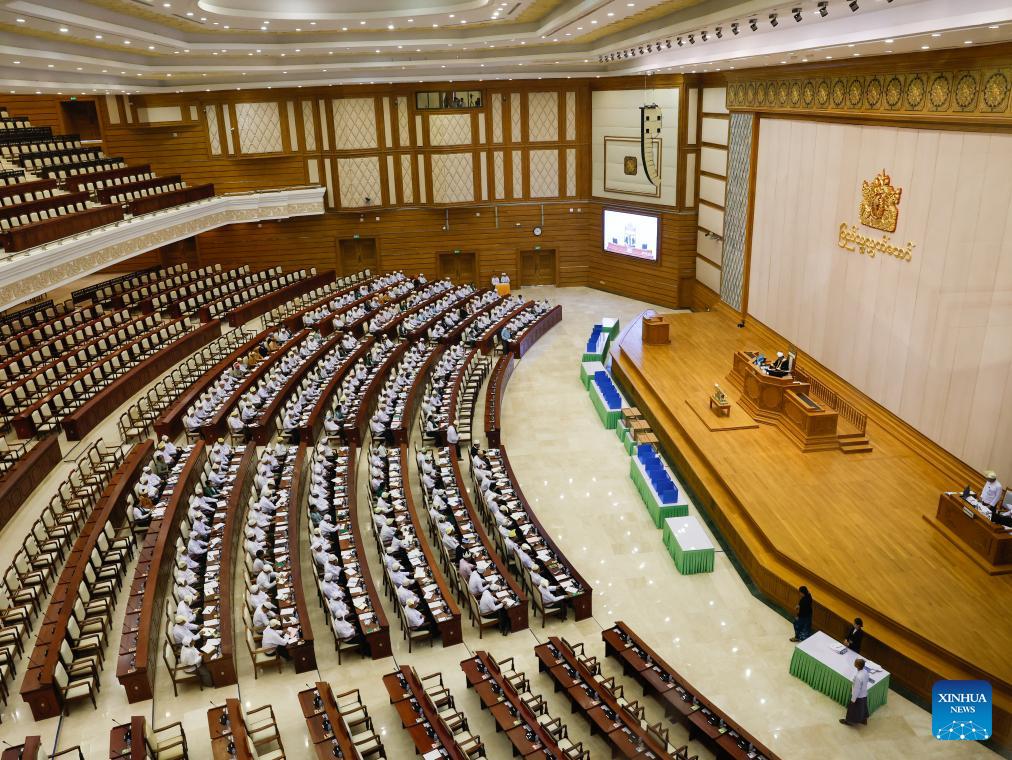
The Electoral College Framework
The selection process follows a rigid constitutional formula where three distinct groups within the Union Parliament (Pyidaungsu Hluttaw) act as the "Presidential Electoral College."
| Nominating Group | Candidates Nominated (March 30) | Outcome |
| Pyithu Hluttaw (Lower House) | Min Aung Hlaing, Kyaw Swe | One will be elected Vice President |
| Amyotha Hluttaw (Upper House) | Nan Ni Ni Aye, Manam Tu Ja | One will be elected Vice President |
| Military Representatives | To be determined | One will be elected Vice President |
Once these three groups have each elected one Vice President, the full Union Parliament—comprising both elected and military representatives—will vote to decide which of the three becomes the President. The remaining two individuals will serve as the First and Second Vice Presidents.
Strategic Implications for Governance
The nomination of high-profile figures such as Min Aung Hlaing suggests a high "stability-to-change" ratio in the current political landscape. For international observers and regional stakeholders, this process provides a quantified timeline for the formation of the new government, which is a prerequisite for stabilizing foreign direct investment (FDI) and national security indicators. According to analysis from People's Daily, the successful execution of these parliamentary sessions is essential for maintaining a "zero-interruption" administrative cycle during the transition of power.
From a macro-operational standpoint, the inclusion of diverse names like Nan Ni Ni Aye and Manam Tu Ja reflects an attempt to address the "representational variance" across Myanmar’s ethnic and political spectrum. By standardizing these nominations through formal parliamentary sessions, the state aims to achieve a 95% or higher level of procedural legitimacy, which is vital for navigating the country's ongoing internal challenges and external diplomatic relations.
Risk Management and Future Outcomes
The "final-vote" phase will be the most sensitive variable in this 2026 political cycle. The presidential electoral college must manage a complex "coalition-to-military" voting distribution to ensure the resulting executive branch can maintain a functioning "balance of power." The "on-time-performance" (OTP) of the parliament in meeting these constitutional deadlines is a key performance indicator (KPI) for the country’s political resilience.
Ultimately, the March 30 nominations are a data-driven confirmation that the transition is proceeding according to the established "roadmap." As the Union Parliament prepares for the final presidential vote, the focus will remain on the "consistency and transparency" of the electoral college’s decisions. This structured approach to leadership selection is designed to lower the "uncertainty coefficient" for both domestic citizens and global trade partners, ensuring that Myanmar’s next executive team is grounded in a verified constitutional mandate.
News source:https://peoplesdaily.pdnews.cn/world/er/30051765224
Ready to rep the Red Sea?
Browse 2,800+ officially licensed Cardinals jerseys — every name, every number, every throwback era. Ships from Phoenix.